
The 2AM Filmmaker
It's amazing what you can learn in the middle of the night.


I glanced at the time - 2am…
…and we still weren’t wrapped.
Oh sure, we were getting close, but our day should have ended hours ago. We were behind. I was tired. I was running myself ragged. And I needed some help; help that I didn’t have.
I was working as the cinematographer for a short film. I eagerly accepted the job and I went in eyes wide open. I wasn’t naive:
I knew that long days came with the territory (it is film production, after all), and
I understood that as a low-budget project, the crew would be very small.
But it wasn’t all bad. The pro’s certainly outweighed the con’s.
The script was fun.
I liked the people working on the film.
The set was free of negativity and conflict.
I was meeting new people, getting plugged into the local film community, and making connections.
However, I was now standing on set in the middle of the night, waiting as the director tried to decide on what to shoot next.
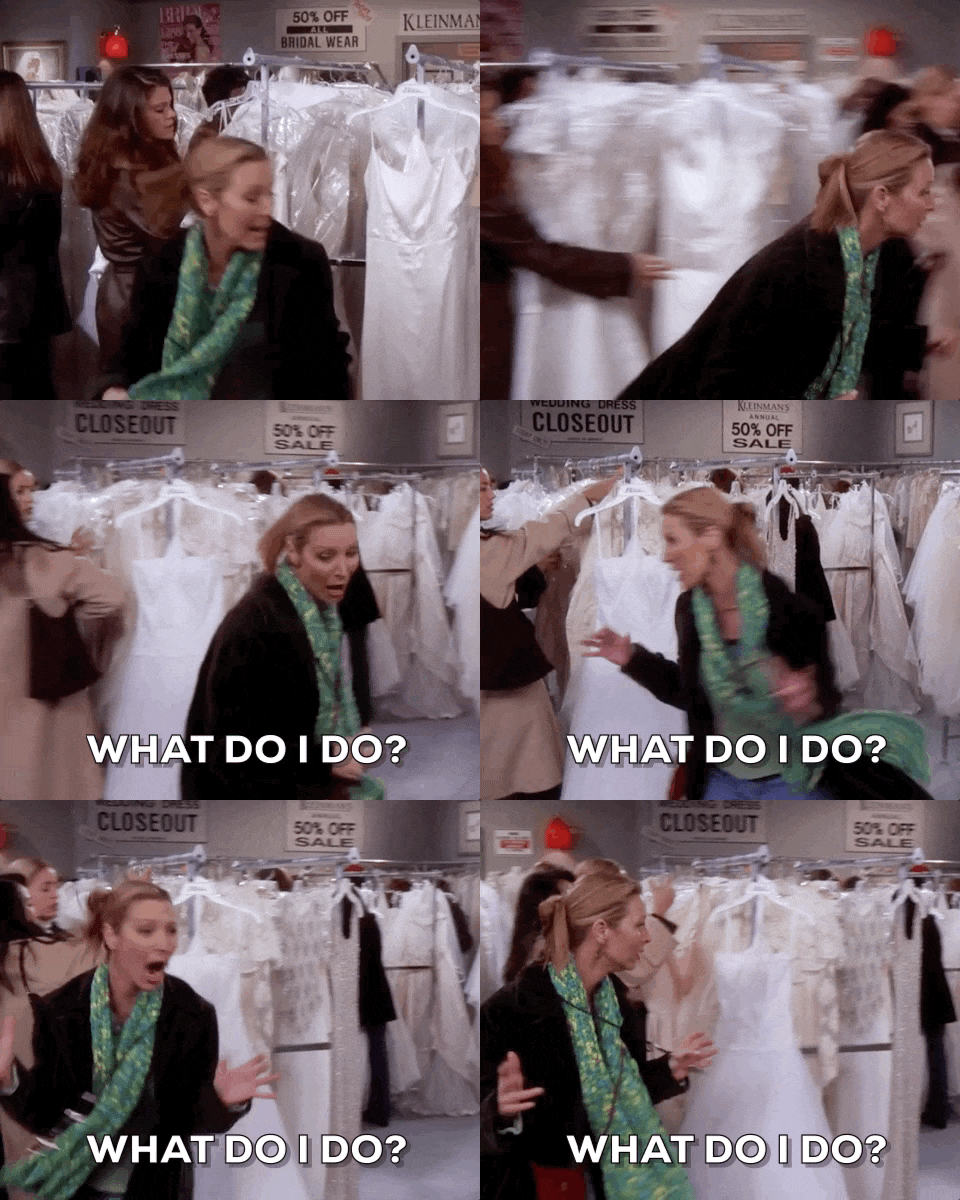
It was the indecisiveness and the inefficiency that was getting to me.
The director was working without a shot list; just making it all up as we went along. This left room for some spontaneity and improvisation, but it also slowed us down. The director would have to stop, think, discuss, and then make a decision. That way of working also meant that sometimes we would move on from a set up, only to return to the exact same set up later for coverage he forgot to get earlier. That meant that I would have to reset and relight in exactly the same way I had before; sometimes in the exact same spot.
It was a grind.
The finished film turned out okay, I guess. I don’t think it ever played in any festivals and I don’t remember if the producer and director ever put it online. I showed it to some of my contacts, because I was proud of some of the lighting setups, but that’s about it.
So, it sort of just drifted out of our collective consciousness.
I’ve written before about how you can learn a lot by observing, both the things you would like to keep and the things you would like to avoid, and this experience was no different.
It further underlined for me the importance of respecting people’s time; ensuring that you are as prepared as possible. When things run efficiently, cast and crew will really enjoy their time on set. It’s when things slow down or grind to a halt that people get frustrated and start to question your leadership and your vision.
Also…
Have a plan for your film.
It isn’t fair to everyone who worked so hard on the project just to see the final film shelved. I get it, sometimes the film doesn’t work out for whatever reason and it just isn’t as good as you initially thought or hoped. And because of that, you don’t want the world to see it. But the very least you as an indie filmmaker can do (if that’s the case) is host a wrap party and/or screening solely for your cast and crew. Let them see the fruits of their labor. Thank them for all their help in bringing it to the screen. They’ll appreciate it.
This happened to me when a group of friends and I made a student film while in college. It never played in any festivals and it never went up online (these were the pre-YouTube days). But we still had a party and screened it for the cast, crew, and all our friends. One member of the cast took a copy back to his university and it became pretty popular among the fraternities there. So, despite the fact that there wasn’t an enormous amount of people who saw this film, those involved still felt it was a project worth their time and effort.
So…
Be prepared
Be efficient
Be respectful
Be appreciative
Be forward-thinking
Not a bad way to make a movie…
…or to live your life.